As a seasoned dry – type transformer supplier, I’ve witnessed firsthand how the integration of communication interfaces has revolutionized the way we manage and monitor our transformers. In this blog, I’ll share insights on leveraging these interfaces for remote monitoring of dry – type transformers, a practice that not only enhances efficiency but also ensures the longevity of these critical assets. Dry-type Transformer

Understanding the Importance of Remote Monitoring
Before delving into the details of communication interfaces, it’s essential to understand why remote monitoring of dry – type transformers is so crucial. Dry – type transformers are used in a wide range of applications, from commercial buildings to industrial facilities. Unplanned downtime can lead to significant losses in production, revenue, and sometimes, pose safety risks.
Remote monitoring allows us to keep a constant eye on the transformer’s operational status, including temperature, load, and other vital parameters. By detecting potential issues early, we can schedule maintenance in advance, reducing the likelihood of unexpected failures and minimizing the impact on our clients’ operations.
Common Communication Interfaces for Remote Monitoring
Modbus
Modbus is one of the most widely used communication protocols in industrial automation and monitoring systems. It offers a simple and efficient way to transfer data between different devices, including dry – type transformers and monitoring stations.
With Modbus, we can access real – time data such as winding temperature, ambient temperature, and load current from the transformer. This data can be transmitted over a serial connection (RS – 232 or RS – 485) or an Ethernet network. The simplicity of Modbus makes it easy to integrate with existing monitoring systems, and many off – the – shelf monitoring devices support this protocol.
For example, we can use a Modbus – enabled temperature sensor installed in the transformer to continuously measure the winding temperature. The sensor sends the data to a Modbus gateway, which then forwards it to a central monitoring server. On the server side, the data can be analyzed, visualized, and used to trigger alarms if any abnormal conditions are detected.
Profibus
Profibus is another popular fieldbus protocol used for industrial communication. It provides a high – speed, reliable data transfer between the transformer and the monitoring system. Profibus is known for its robustness and ability to handle large amounts of data, making it suitable for complex monitoring scenarios.
In a dry – type transformer monitoring application, a Profibus interface can be used to connect various sensors and actuators to the transformer control unit. These sensors can monitor parameters such as oil level (if applicable), partial discharge, and vibration. The Profibus network then transmits the data to a programmable logic controller (PLC) or a supervisory control and data acquisition (SCADA) system for further processing.
One of the advantages of Profibus is its ability to support multiple devices on a single network. This allows us to monitor multiple dry – type transformers simultaneously using a single communication infrastructure, reducing the overall cost and complexity of the monitoring system.
Ethernet/IP
Ethernet/IP is an industrial Ethernet protocol that combines the advantages of Ethernet and the Common Industrial Protocol (CIP). It offers high – speed data transfer, easy integration with existing Ethernet networks, and support for a wide range of devices.
In the context of dry – type transformer monitoring, Ethernet/IP can be used to connect the transformer to a local area network (LAN) or a wide area network (WAN). The transformer can be equipped with an Ethernet/IP – enabled communication module, which allows it to communicate with other devices on the network, such as monitoring computers, servers, and mobile devices.
This protocol enables real – time data access from anywhere in the world, as long as there is an Internet connection. For example, a maintenance engineer can use a laptop or a smartphone to remotely access the transformer’s monitoring data while on the go, enabling quick decision – making and timely response to any issues.
Implementing Remote Monitoring with Communication Interfaces
Step 1: Select the Right Communication Interface
The first step in implementing remote monitoring is to select the most appropriate communication interface for your application. Consider factors such as the distance between the transformer and the monitoring station, the amount of data to be transferred, the existing infrastructure, and the compatibility with other devices in the system.
For short – distance applications with relatively low data transfer requirements, a serial – based protocol like Modbus may be sufficient. If you need high – speed data transfer and support for multiple devices, Profibus or Ethernet/IP may be more suitable.
Step 2: Install the Necessary Hardware
Once you’ve selected the communication interface, the next step is to install the necessary hardware. This may include communication modules, sensors, and gateways.
The communication module should be installed on the transformer and configured to communicate with the selected protocol. The sensors should be placed in strategic locations to monitor the critical parameters of the transformer, such as temperature, load, and vibration. The gateway is used to bridge the communication between the transformer and the monitoring station, converting the data from the transformer’s protocol to a format that can be understood by the monitoring system.
Step 3: Configure the Monitoring System
After installing the hardware, you need to configure the monitoring system. This involves setting up the software on the monitoring server to receive, analyze, and display the data from the transformer.
You can define alarm thresholds for each parameter, so that the system will send notifications when the values exceed the predefined limits. You can also set up historical data logging to track the transformer’s performance over time and identify any trends or patterns.
Step 4: Test and Validate the System
Before putting the remote monitoring system into full – scale operation, it’s essential to test and validate it. This involves checking the communication between the transformer and the monitoring station, verifying the accuracy of the sensor data, and testing the alarm functionality.
During the testing phase, you can simulate various operating conditions to ensure that the system can detect and respond to any abnormal situations correctly. Any issues or discrepancies should be addressed before the system is deployed.
Benefits of Using Communication Interfaces for Remote Monitoring
Improved Reliability
By continuously monitoring the transformer’s parameters, we can detect potential problems early and take proactive measures to prevent failures. This improves the overall reliability of the transformer and reduces the risk of unplanned downtime.
Cost Savings
Remote monitoring eliminates the need for frequent on – site inspections, reducing labor costs and travel expenses. It also allows for more efficient maintenance planning, as we can schedule maintenance based on the actual condition of the transformer rather than a fixed schedule.
Enhanced Safety
Monitoring critical parameters such as temperature and partial discharge can help identify potential safety hazards, such as overheating or insulation breakdown. By taking timely action, we can prevent accidents and ensure the safety of the personnel and equipment.
Data – Driven Decision Making
The data collected through remote monitoring can provide valuable insights into the transformer’s performance. We can use this data to optimize the operation of the transformer, improve energy efficiency, and make informed decisions about equipment upgrades and replacements.
Conclusion
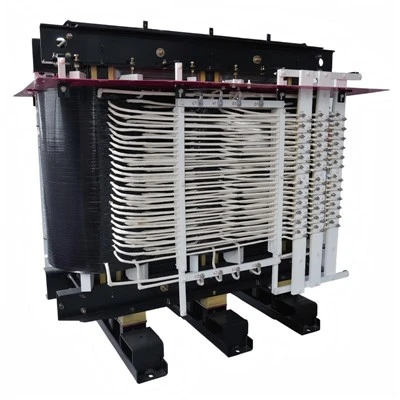
In conclusion, communication interfaces play a vital role in the remote monitoring of dry – type transformers. By leveraging protocols like Modbus, Profibus, and Ethernet/IP, we can collect real – time data from the transformer, analyze it, and take proactive measures to ensure its reliable operation.
Intergrated Energy Storage System As a dry – type transformer supplier, we are committed to providing our customers with the latest technology and solutions for remote monitoring. If you’re interested in learning more about how our dry – type transformers can be integrated with communication interfaces for remote monitoring, or if you’re considering purchasing dry – type transformers for your project, we’d love to hear from you. Contact us to start a discussion about your specific needs and requirements.
References
- "Industrial Communication Networks: Principles and Applications" by Roger S. Pressman.
- "Modbus Protocol Specification" by Modbus Organization.
- "Profibus: Technology and Applications" by Uwe Vogt.
- "Ethernet/IP: The Industrial Ethernet Standard" by ODVA (Open DeviceNet Vendor Association).
Ruibian (Jiangsu) Electric Power Co., Ltd.
Ruibian (Jiangsu) Electric Power Co., Ltd. is one of the most professional dry-type transformer manufacturers and suppliers in China, featured by quality products and good price. Please rest assured to buy durable dry-type transformer in stock here from our factory. Contact us for pricelist.
Address: No.89 Changjiang West Road, Haian City, Jiangsu Province, China
E-mail: business@ruibianjiangsu.cn
WebSite: https://www.ruibianpower.com/
