When it comes to water purification technology, CEDI (Continuous Electrodeionization) equipment has long been hailed as a revolutionary solution. As a professional supplier of EDI and CEDI equipment, I’ve witnessed firsthand the numerous advantages these systems offer, such as continuous and efficient production of high – purity water, reduced chemical usage, and compact design. However, it’s not all sunshine and roses. In this blog, I’d like to delve into the disadvantages of CEDI equipment, which are important for potential customers to consider before making a purchase decision. EDI and CEDI Equipment

High Initial Investment
One of the most significant drawbacks of CEDI equipment is the high initial cost. The technology behind CEDI is complex, involving sophisticated ion – exchange membranes, electrodes, and precise control systems. These components are expensive to manufacture and require high – precision engineering. For example, the ion – exchange membranes, which are the heart of the CEDI system, need to have excellent ion – selective properties and durability. The manufacturing process of these membranes is intricate and costly, contributing significantly to the overall price of the equipment.
In addition to the cost of the equipment itself, there are other associated expenses. Installation of CEDI equipment often requires professional technicians who are well – versed in water treatment and electrical engineering. They need to ensure that the equipment is properly connected to the existing water supply and electrical systems, and that all safety measures are in place. This professional installation service comes with a price tag, further increasing the initial financial burden on the buyer. For small and medium – sized enterprises with limited budgets, this high initial investment can be a major deterrent.
Sensitivity to Feed Water Quality
CEDI equipment is extremely sensitive to the quality of the feed water. It requires a relatively high – quality feed water to operate effectively. If the feed water contains high levels of contaminants such as suspended solids, organic matter, or hardness, it can cause serious problems in the CEDI system.
Suspended solids can clog the ion – exchange resin beds and the flow channels in the CEDI module. This not only reduces the flow rate of water through the system but also affects the ion – exchange process. As a result, the overall performance of the CEDI equipment deteriorates, and the quality of the produced water may not meet the required standards.
Organic matter in the feed water can foul the ion – exchange membranes. Organic compounds can adhere to the surface of the membranes, blocking the ion – transfer channels and reducing the membrane’s ion – selective properties. This leads to a decrease in the efficiency of the CEDI system and may even require more frequent membrane replacement, which is expensive.
Hardness in the feed water, mainly in the form of calcium and magnesium ions, can cause scaling on the membranes and electrodes. Scaling reduces the electrical conductivity of the system and can damage the membranes and electrodes over time. To prevent these problems, a comprehensive pretreatment system is required to remove these contaminants from the feed water. This pretreatment system includes processes such as filtration, activated carbon adsorption, and softening, which add to the complexity and cost of the overall water purification system.
Complex Maintenance Requirements
Maintaining CEDI equipment is a complex task that requires specialized knowledge and skills. The internal components of CEDI systems, such as the ion – exchange membranes, electrodes, and resin beds, need to be monitored and maintained regularly.
The ion – exchange membranes need to be inspected for any signs of damage or fouling. Over time, the membranes can become degraded due to chemical reactions, mechanical stress, or exposure to high – energy ions. If a damaged membrane is not detected and replaced in a timely manner, it can lead to a significant decrease in the performance of the CEDI system.
The electrodes in the CEDI equipment are also subject to wear and tear. During the operation of the system, electrochemical reactions occur at the electrodes, which can cause corrosion and erosion. Regular cleaning and replacement of electrodes are necessary to ensure the proper functioning of the system.
In addition, the resin beds in the CEDI module need to be regenerated periodically. The regeneration process is complex and requires strict control of the chemical composition, flow rate, and temperature of the regeneration solution. Improper regeneration can damage the resin and reduce its ion – exchange capacity.
Due to the complexity of CEDI equipment maintenance, companies often need to hire specialized technicians or invest in training their own staff. This not only incurs additional costs but also requires a significant amount of time and effort.
Limited Capacity for High – TDS Feed Water
CEDI equipment has limitations when it comes to treating feed water with high total dissolved solids (TDS). The ion – exchange process in CEDI systems relies on the movement of ions through the membranes and resin beds. When the TDS of the feed water is too high, the concentration of ions in the water can overwhelm the ion – exchange capacity of the CEDI module.
As the TDS increases, the electrical resistance in the CEDI system also increases. This requires more electrical energy to drive the ion – exchange process, leading to higher operating costs. In extreme cases, if the TDS is too high, the CEDI system may not be able to produce water of the desired quality at all.
For applications where the feed water has a high TDS, such as in some industrial processes or areas with poor water sources, additional treatment steps are needed to reduce the TDS before the water can be fed into the CEDI equipment. This may involve processes such as reverse osmosis pre – treatment, which adds to the complexity and cost of the overall water treatment system.
Electrical Energy Consumption
CEDI equipment consumes a significant amount of electrical energy. The operation of CEDI systems is based on the principle of electro – dialysis, which requires the application of an electric field to drive the ion – exchange process. The higher the quality of water required, the more electrical energy is needed.
The electrical energy is used to move ions from the feed water through the ion – exchange membranes and remove them from the product water. In addition, the power supply system for CEDI equipment needs to be stable and reliable to ensure the proper functioning of the system. This means that companies using CEDI equipment need to have a sufficient and continuous supply of electricity, which can be a challenge in some areas with unreliable power grids.
High electrical energy consumption also translates into higher operating costs. For large – scale water purification plants using CEDI equipment, the electricity bill can be a significant part of the overall operating expenses. This is an important factor to consider for companies looking to optimize their production costs.
Conclusion
While CEDI equipment offers many advantages in water purification, it also has several notable disadvantages. The high initial investment, sensitivity to feed water quality, complex maintenance requirements, limited capacity for high – TDS feed water, and high electrical energy consumption are all factors that potential customers need to take into account.
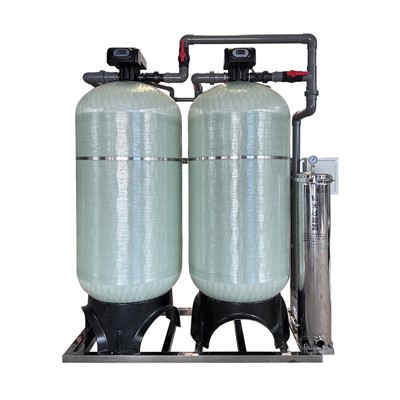
However, it’s important to note that these disadvantages can often be mitigated with proper planning and management. For example, by conducting a detailed cost – benefit analysis, companies can determine whether the long – term benefits of using CEDI equipment outweigh the initial investment. By implementing a comprehensive pretreatment system, the problems caused by poor feed water quality can be minimized.
RO Purified Water Equipment As a supplier of EDI and CEDI equipment, we understand the concerns of our customers and are committed to providing them with the best solutions. We have a team of professional engineers who can help customers design customized water treatment systems that take into account the specific requirements and constraints of each project. If you have any questions about CEDI equipment or are considering purchasing our products, we’d love to hear from you. Please feel free to contact us to discuss your needs and explore how our CEDI equipment can be tailored to meet your water purification requirements.
References
- Fane, A. G., & Fell, C. J. D. (Eds.). (1987). Synthetic Polymer Membranes: A Structural Perspective. John Wiley & Sons.
- Strathmann, H. (2010). Ion – Exchange Membranes: Basics and Applications. Wiley – VCH.
- Belfort, G., Davis, R. H., & Zydney, A. L. (1994). The Behavior of Suspensions and Macromolecular Solutions in Crossflow Microfiltration. Journal of Membrane Science, 96(1 – 2), 1 – 58.
Shandong Yanuo Environmental Protection Equipment Co., Ltd.
We’re well-known as one of the leading edi and cedi equipment manufacturers and suppliers in China, featured by quality products and good price. Please rest assured to buy bulk edi and cedi equipment made in China here from our factory. Customized orders are welcome.
Address: North Side of the Road, 1,000 Meters West of the Intersection of Fenghuangshan West Road and Provincial Highway S102, Wangfu Subdistrict, Qingzhou City, Weifang City, Shandong Province.
E-mail: ynhb.499973983@gmail.com
WebSite: https://www.zkyaruo.com/
