If you’ve ever stood beside a large steam turbine during a plant shutdown, the kind that rumbles so loud you feel the vibration in your boots, you might have glanced at one of its less flashy parts and thought, “What’s that even doing there?” For years, I heard that question from plant maintenance crews and turbine engineers when we walked our warehouse floor holding balance piston samples—people who knew their turbines inside and out, but had never stopped to explain the tiny, high-stakes part that keeps those massive machines running without tearing themselves apart. I’m in the steam turbine components business, so I don’t just sell parts; I talk to guys who have watched a turbine go down because a small, overlooked component failed. Today, let’s cut through the jargon and break down exactly what a steam turbine balance piston does, why it’s non-negotiable, and how we make sure ours hold up when it matters most. Steam Turbine Components

Let’s start with the basics, because you can’t understand the balance piston without understanding how a steam turbine moves steam. A typical utility or industrial steam turbine is stacked with rows of stationary blades (called nozzles) and rotating blades (buckets) that line the rotor. When high-pressure steam blasts through those rows, it pushes the rotor to spin—this is where mechanical power comes from, whether it’s turning a generator for a power plant, a compressor for an oil refinery, or a pump for a processing plant. Here’s the problem: steam doesn’t just push along the axis of the rotor. The high-pressure side of the turbine—where steam first enters—has way more pressure than the exhaust side, where it exits after doing work. This pressure difference creates a massive axial thrust, a force that tries to push the entire rotor backward, straight out of the turbine casing.
Think of it like pushing a full shopping cart from the back: the pressure on the high-pressure side is shoving the rotor hard toward the low-pressure side. Left unchecked, that force would grind the rotor’s blades into the stationary casing, bend the rotor shaft, and cause a catastrophic failure in minutes. I’ve seen the aftermath of this once, early in my career. A refinery called us at 2 a.m., frantic because their 50-MW turbine had locked up during a routine load shift. When they tore it down, they found the rotor’s forward bearing had worn through, because the axial thrust had overwhelmed the balance piston that was supposed to hold it back. The balance piston hadn’t seated right during the last overhaul, the crew said, and no one noticed until it was too late. That’s the moment I realized this part isn’t a “minor component”—it’s the turbine’s first line of defense.
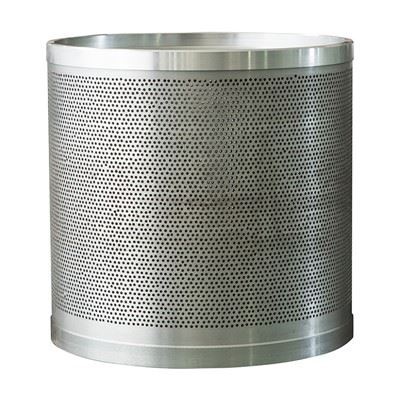
So what is the balance piston, exactly? It’s a disk-shaped component, mounted on the high-pressure end of the turbine rotor, that fits into a matching groove in the casing, with a tiny, precise gap between it and the casing (usually measured in thousandths of an inch). It works on a simple pressure equalization principle: instead of the full high-pressure steam hitting the entire face of the rotor’s high-pressure end, the balance piston splits that pressure. Part of the steam pressure acts on the back side of the piston, facing the exhaust side of the turbine, creating a counter-thrust that cancels out most of the forward axial thrust from the steam flowing through the blades. The small gap between the piston and casing is critical here—it lets a tiny amount of steam leak past, which keeps the back side of the piston at a pressure that’s calibrated perfectly to balance the thrust.
Wait, but why not just use a thrust bearing? I get that question all the time. Thrust bearings are designed to handle small, residual axial thrust, but they can’t handle the massive, continuous force from a large turbine. A 100-MW turbine can generate tens of thousands of pounds of axial thrust—way more than even the largest industrial thrust bearings can manage over time. The balance piston takes care of 90 to 95 percent of that thrust, so the thrust bearing only has to handle the tiny leftover force. That’s why balance pistons are non-negotiable for turbines over a certain size, and even for smaller high-pressure units. Without them, thrust bearings would wear out in days, not years.
Now, let’s get into the details that make a good balance piston vs. a bad one, because this is where our company stands out as a steam turbine components supplier. The gap between the piston and casing is everything here. If the gap is too small, thermal expansion when the turbine heats up can cause the piston to rub against the casing, which generates heat, wears down the component, and can lead to a thrust spike. If the gap is too large, too much steam leaks past the piston, and the pressure balance is thrown off—so the counter-thrust is too low, and axial thrust still wears out the bearings. We machine our balance pistons to tolerances as tight as 0.002 inches, and we coat them with a specialized erosion-resistant material that stands up to the wet steam that often flows past the piston in low-pressure turbine sections. Wet steam is full of tiny water droplets that erode metal over time, so a cheap balance piston without that coating will wear out in half the time of a properly coated one.
Another thing people don’t talk about is that balance pistons aren’t one-size-fits-all. A balance piston for a 200-MW coal-fired turbine is nothing like one for a small steam turbine at a food processing plant that runs at lower pressure. The material is different too. For high-pressure, high-temperature turbines, we use forged steel that can handle steam at up to 1,000 degrees Fahrenheit, while for low-pressure units, we use corrosion-resistant alloys that hold up better to moisture. We work with each client to reverse-engineer their balance piston if they don’t have the original specs, because even a small change in pressure or load can throw the balance off. Last year, a biomass power plant called us because their original balance piston had a design flaw that caused frequent thrust spikes during seasonal load shifts (when their steam flow changed with the amount of biomass they were burning). We redesigned the piston’s face geometry to match their new steam conditions, and they haven’t had a thrust bearing failure in 10 months.
You might also be wondering: does the balance piston ever need to be replaced? Like every turbine component, yes, but its lifespan depends on how it’s maintained. Regular turbine overhauls are the time to inspect the balance piston for wear, cracks, or deformation. During that inspection, technicians check the gap with a feeler gauge, and look for signs of rubbing or erosion. Over time, even the best piston will wear down slightly, and the gap will grow, which means more steam leakage and less thrust balance. That’s when replacement is necessary. We see a lot of plants trying to stretch balance piston life too far, which leads to more expensive repairs down the line—like replacing a damaged rotor, which can cost six figures or more, vs. a balance piston that runs a few thousand dollars.
What about common misconceptions about balance pistons? One I hear all the time is that once the piston is installed, you don’t have to touch it. That’s not true. The balance of thrust depends on the pressure in the piston’s back chamber, which is affected by the condition of the seals around the piston, the alignment of the rotor, and even the cleanliness of the steam. If there’s a leak in the seal lines that feed steam to the back of the piston, or if the rotor is misaligned, the piston can’t do its job. Another myth is that balance pistons only matter during full load operation. No—they matter during startup and shutdown too. When a turbine is warming up or cooling down, the rotor and casing expand and contract at slightly different rates, which changes the gap between the piston and casing. A well-made balance piston will account for that thermal growth, so it maintains the correct gap even at partial load or during transients. We test every balance piston we manufacture in a pressure chamber that simulates the exact steam conditions the piston will see in the turbine, so we know it will perform even during startup and load swings.
Let’s circle back to why this matters for plant operators. At the end of the day, turbines are the workhorses of industrial and power operations. A single unplanned outage can cost a plant tens of thousands of dollars per day in lost production, not to mention the costs of repairs. The balance piston is a small, relatively inexpensive part, but it’s critical to preventing those outages. That’s why we don’t just sell balance pistons—we support our clients with technical guidance, too. We don’t just ship a part and disappear. If a technician has questions about installing the balance piston, checking the gap, or troubleshooting a thrust issue, our team of engineers is here to walk them through it. We’ve worked with plants across the globe, from small industrial sites to large utility fleets, so we know the specific challenges each type of operation faces.
If you’re a turbine operator, maintenance manager, or engineer who’s dealt with axial thrust issues, or if you just need a reliable replacement balance piston for an upcoming overhaul, we’re here to help. We specialize in custom and OEM-grade steam turbine components, built to exacting standards and tested to perform under real-world conditions. No cutting corners, no generic parts that will wear out fast—just parts that keep your turbines running smoothly, so you can avoid unplanned outages and keep production on track.
Before I wrap this up, let’s recap the core functions of the balance piston, because it’s easy to get lost in the details: first, it reduces axial thrust on the turbine rotor, so the thrust bearing doesn’t have to handle more than it’s designed for; second, it maintains pressure balance across the rotor during all load conditions, preventing rubbing between moving and stationary parts; third, it extends the lifespan of other critical turbine components by reducing excess force and wear. That’s the role of a balance piston, plain and simple. It’s the quiet part that keeps the big machine running when no one’s looking.
If you’re ready to source a balance piston, or if you need help troubleshooting a thrust issue with your current turbine, reach out to our team to start a conversation about your needs. We’ll work with you to find the right solution, whether that’s a direct replacement, a custom-modified piston for your specific operating conditions, or technical support for your next overhaul.
Steam Turbine Blades References:
- Steam Turbines: Design, Application, and Repairs, E. C. Smith, Fairmont Press, 2006.
- Power Plant Engineering, R. K. Rajput, Laxmi Publications, 2008.
- “Axial Thrust Control in Steam Turbines,” Technical Report, American Society of Mechanical Engineers, 2012.
- Steam Turbine Components and Maintenance Guidelines, National Association of Power Engineers, 2019.
Hebei Guoyuan Electric Co., Ltd.
With abundant experience, we are one of the most professional steam turbine components manufacturers in China. We warmly welcome you to buy discount steam turbine components for sale here and get pricelist from our factory. Quality products and low price are available.
Address: No. 18 Tianshan Science and Technology Industrial Park, No. 319 Xiangjiang Road, Shijiazhuang High-tech Zone, Hebei Province, China
E-mail: turbine@goineep.com
WebSite: https://www.goineep.com/
