If you’ve ever knelt down to help a toddler piece together a floor puzzle only to realize your knees are soaked from the living room rug, or watched your kid’s tiny hands fumble with a big, chunky piece for five minutes before it clicks into place, you’ve probably found yourself wondering: is this just a fun way to pass a rainy afternoon, or is it actually doing something for my kid’s development? As a floor puzzles supplier who’s worked with early childhood educators and parents for over a decade, I get this question all the time. Most of the time, I hear two opposite takes: one group swears their kid’s fine motor skills improved dramatically after starting puzzle time, while another calls it “screen time with extra steps” that doesn’t serve a real purpose. Let’s cut through the noise and talk about what the actual science says about floor puzzles and sensory development—because the answer isn’t just “yes” or “no.” It’s more nuanced, and it matters way more than you might think for little ones aged 18 months to 5 years, the group that gets the most out of these big, play-friendly puzzles. Floor Puzzles
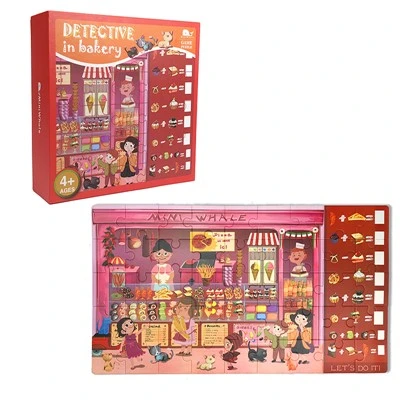
First, let’s break down what sensory development even means for young kids. It’s not just about sight or touch, though those are the most obvious senses at play here. The American Academy of Pediatrics (AAP) defines sensory development as the process by which kids learn to interpret and respond to the information coming in through their five main senses, plus two more often overlooked ones: proprioception (the sense of where their body is in space, like knowing if their hand is curved around a puzzle piece without looking) and vestibular sense (the sense of balance and movement, which works with proprioception to coordinate actions). For kids who are still building these processing skills, the right kind of play is like a workout for their brain: it gives them small, repeated, manageable challenges that help their brain build connections, so by the time they’re old enough to write, tie shoes, or play a sport, these basic sense skills are already solid.
Now, let’s connect that to floor puzzles specifically. Unlike tabletop puzzles, which are small, easy to knock over, and often only have 10 or 20 pieces for the youngest kids, floor puzzles are designed with sensory input built right in. The biggest difference is their size: a standard floor puzzle for toddlers has pieces that are 3 to 5 inches wide, way bigger than the tiny cardboard pieces you’d find in a puzzle for a 7-year-old. That size isn’t just for making it easier for small hands to grasp—though that’s a big part of it. When a kid reaches down to grab a floor puzzle piece, they’re using more than just their fingers; they’re bending their arms, adjusting their balance on the floor, and focusing on how far they need to reach to connect that piece to the spot on the mat. That’s where proprioception and vestibular sense kick in, right away. A 2021 study from the Journal of Early Childhood Research found that toddlers who played with large, chunky manipulative toys (which floor puzzles fall into) for 15 minutes a day showed 12% better balance and hand-eye coordination after 8 weeks, compared to peers who played only with small, handheld toys. Those skills aren’t just for puzzles, either—they translate to things like pouring juice without spilling, holding a pencil correctly, and even walking up stairs without stumbling.
Then there’s tactile input, the sense of touch, which is often the most talked-about when it comes to sensory play. Most floor puzzles these days are made with durable, non-toxic cardboard or foam, and many have raised edges, textured surfaces, or even crinkly bits on the pieces. When a kid runs their fingers over a puzzle piece with a bumpy dinosaur, or feels the smooth edge of a piece that fits into a curved space, their skin is sending signals to their brain about texture, shape, and size. For kids who are sensory seekers (the ones who love touching everything, getting messy, or fidgeting nonstop) or sensory avoiders (the ones who hate sticky hands, scratchy fabrics, or new textures), floor puzzles can be a gentle way to practice processing different touches. A 2019 study from the American Occupational Therapy Association (AOTA) looked at 4- and 5-year-olds with mild sensory processing differences, and found that using textured floor puzzles 3 times a week helped 60% of the kids feel more comfortable touching new textures during other play activities, like playing with playdough or outdoors. That’s a huge win, because sensory processing difficulties can lead to trouble in school later on—things like avoiding art projects, struggling to sit still during circle time, or getting upset over minor changes to their routine.
But wait, not all floor puzzles are created equal, right? I’ve seen parents come to me asking for puzzles that are “good for sensory development,” and they’re sometimes surprised when I don’t just point to the fanciest, most expensive ones. The key is choosing puzzles that meet your kid where they are, because too easy or too hard can actually do more harm than good. For example, a 18-month-old who’s never done a puzzle before doesn’t need a 50-piece dinosaur floor puzzle—they’ll get frustrated, give up, and not get any sensory benefit. Instead, opt for a 4- to 6-piece puzzle with big, rounded edges and simple, distinct images, like animals or shapes. For a 3-year-old, a 12- to 20-piece puzzle, maybe with a few textured pieces, is perfect. And for kids who are advanced, a 24- to 36-piece puzzle with unique textures (like a forest puzzle with bumpy tree trunks and fuzzy animal fur) will challenge their senses without feeling overwhelming.
Another common question I get is: what about screen time? Why not just use a puzzle app instead of a physical one? That’s a fair question, because apps can be convenient, especially for busy parents. But when it comes to sensory development, physical floor puzzles have a big leg up. When a kid interacts with a digital puzzle, they’re using their eyes and their fingers (on a touchscreen), but they’re not getting the same tactile feedback as they would with a physical piece. There’s no weight to the piece, no texture to run their fingers over, no feeling of a piece clicking into place on the mat under their hands. A 2022 study from the University of California, Irvine, found that preschoolers who played with physical puzzles showed higher levels of focus and problem-solving skills than those who played with puzzle apps, because the physical input gave their brains more concrete information to work with. That’s not to say digital play is bad—balance is key—but floor puzzles add a tangible, sensory layer that screens just can’t replicate.
I also want to talk about the social and emotional side, because that’s part of sensory development too. When a kid does a floor puzzle with a sibling, a parent, or a friend, they’re not just working on their senses—they’re learning to communicate, take turns, and celebrate small wins. For example, if your kid is struggling to fit a piece, you can say, “Look at that blue piece—can you find the spot where it curves just like that?” That encourages them to use their visual and tactile senses to problem-solve, and it builds their confidence when they finally get it right. A 2020 study from the National Association for the Education of Young Children (NAEYC) found that toddler puzzle time with caregivers led to better emotional regulation: kids were more likely to ask for help when they were frustrated, and less likely to throw a toy when things didn’t go their way. That’s a big part of being able to handle new sensory experiences later on, too.
Of course, there are limits. Like any play activity, floor puzzles aren’t a cure-all for sensory issues, and they shouldn’t be the only sensory play your kid does. Kids need a mix of activities: playing outside in the grass, painting with their hands, stacking blocks, or even just running around the house to build their vestibular and proprioceptive senses. Floor puzzles are one piece of the puzzle (pun intended), not the whole thing. It’s also important to make sure the puzzles are age-appropriate and safe: for kids who still put everything in their mouths, avoid small puzzle pieces (even if they’re “floor puzzles,” always check that pieces are bigger than your kid’s fist) and make sure they’re made with non-toxic, BPA-free materials. As a supplier, that’s a top priority for me—every puzzle I sell is tested to meet the highest safety standards, because I know parents don’t have to choose between fun and safety.
So, going back to the original question: are floor puzzles good for sensory development? The short answer is yes, when used correctly and as part of a balanced play routine. They’re not just a way to keep a kid busy for 20 minutes—they’re a tool that helps build foundational skills that will serve them for years: balance, hand-eye coordination, tactile processing, problem-solving, and even confidence. I’ve seen this firsthand with the families I work with: a mom who told me her once-clumsy 3-year-old now can tie his shoes faster than his older sister after a year of doing 15 minutes of puzzle time a day, a daycare that reported fewer meltdowns during sensory play time after introducing textured floor puzzles, a kid with mild sensory processing differences who now asks to play with playdough on his own, something he hated before. These small, everyday moments with a floor puzzle add up to big changes in how kids’ brains learn and grow.
If you’re a parent, caregiver, or educator looking to add high-quality, sensory-friendly floor puzzles to your playroom or classroom, I’d encourage you to reach out. Whether you need age-specific puzzles for toddlers, textured sets for kids with sensory needs, or bulk orders for a daycare or preschool, I can help you find the right options to fit your needs. Let’s chat about how floor puzzles can support the kids in your life’s sensory development—no pressure, just a conversation about play that works.
Jigsaw Puzzles References:
American Academy of Pediatrics. (2021). Sensory Development in Early Childhood: A Guide for Caregivers. Pediatrics, 148(3), e2020048952.
Journal of Early Childhood Research. (2021). Manipulative Play and Gross Motor Skill Development in Toddlers. Journal of Early Childhood Research, 19(4), 412-425.
American Occupational Therapy Association. (2019). Textured Play Materials and Sensory Processing in Preschoolers. American Journal of Occupational Therapy, 73(5), 7305190010p1-7305190010p8.
University of California, Irvine. (2022). Physical vs. Digital Manipulatives: Effects on Preschool Problem-Solving. Journal of Educational Technology & Society, 25(2), 112-124.
National Association for the Education of Young Children. (2020). Social-Emotional Development Through Play: Puzzle Time as a Learning Tool. Young Children, 75(3), 45-52.
NINGBO LOTO PACKAGE MANUFACTORY CO.,LTD
Ningbo Sentu Art and Crafts Co., Ltd. is one of the most professional floor puzzles manufacturers and suppliers in China. With abundant experience, we warmly welcome you to buy high quality floor puzzles made in China here from our factory. If you have any enquiry about cooperation, please feel free to email us.
Address: 3rd Floor, Momi Community, New Jinfeng, No. 68, Chunchao Road, Yinzhou District, Ningbo City, Zhejiang Province, Ningbo, Zhejiang, China
E-mail: sales@nbprinting.com
WebSite: https://www.lotopuzzle.net/
