Let’s talk about something that keeps our reverse osmosis (RO) membranes running like a well-oiled machine: the membrane integrity test. As someone who’s spent the last decade working with these thin, crucial sheets of polymer that turn tap water into the clean stuff we depend on, I can tell you this test isn’t just a box to tick on a maintenance checklist—it’s the difference between a system that produces consistent, safe water and one that’s wasting energy, breaking down unexpectedly, or worse, letting contaminants slip through. When I get calls from plant operators or homeowners panicking because their RO system’s effluent has a weird spike in total organic carbon (TOC) or a rising pressure drop, 9 times out of 10, we start with a membrane integrity test. It’s the detective work that uncovers small problems before they become big, expensive headaches. Reverse Osmosis Membrane
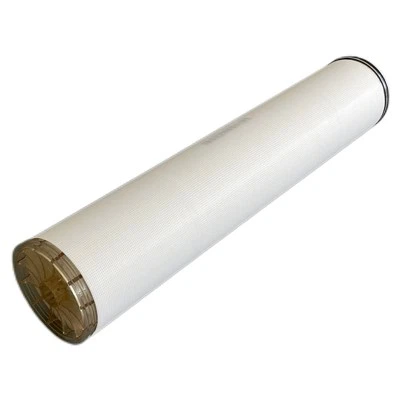
First, let’s ground this in what RO membranes do, just to make sure we’re all on the same page. RO works by forcing water under high pressure through a semipermeable membrane with tiny pores—less than a nanometer wide, actually. These pores are sized to block 99%+ of dissolved salts, bacteria, viruses, and even microplastics. But over time, membranes wear out, or they get damaged during shipping, installation, or backwashing, or they develop micro-leaks from mineral buildup (scaling) that erodes the membrane surface. That’s where integrity testing comes in: it’s a set of standardized checks to make sure those pores are still intact, no gaps or tears are letting unwanted stuff pass through, and the membrane is doing exactly what it’s supposed to do.
I’ve seen people new to the industry brush this off, like “if the pressure gauge looks good, why test?” But here’s the thing: a pressure gauge might look normal even if there’s a tiny pinhole in a membrane element. Or a system could be losing efficiency slowly, so the operator doesn’t notice until a contaminant test comes back off-spec. Membrane integrity tests are non-destructive (mostly—there’s one older method that’s a bit more hands-on) and they’re the only reliable way to verify the barrier is holding.
Now, let’s break down the most common tests we use in the field, because not all tests are created equal. Depending on the size of the RO system, the application, and the age of the membranes, we’ll pick one or a combination. The first one I always start with for new installations or after a membrane replacement is the Pressure Decay Test (PDT). It’s simple, it’s standardized by organizations like the American Water Works Association (AWWA, which is our go-to for water treatment standards), and it’s easy to walk someone through if they have basic training.
Here’s how it works: you isolate a single RO membrane element or a whole pressure vessel, then fill it with pressurized air (or sometimes nitrogen, to avoid reacting with the membrane polymer) to a specific pressure—usually around 100 to 150 psi, depending on the membrane type and manufacturer specs. You seal both ends of the vessel tightly, then leave it for 5 to 15 minutes. If the pressure drops more than a set threshold (AWWA says for most standard polyamide RO membranes, that’s less than 5 psi over 10 minutes for a single element), that means there’s a leak: a tear in the membrane sheet, a bad O-ring seal at the end of the element, or a gap between the element and the pressure vessel. I did a job last year for a small municipal water system where the PDT caught a single damaged element in a 6-element vessel before it could contaminate the entire system’s product water. The operator had replaced all elements at once, and one had gotten a tiny tear when being slid into the vessel—if we’d skipped the PDT, they would have run the system for weeks with faulty product water.
Another test we use all the time is the Diffusive Permeation Test (DPT), sometimes called the Gas Permeation Test. This one is a bit more sensitive than PDT, which makes it great for older membranes where leaks are smaller, or for high-purity applications like pharmaceutical water, where even tiny micro-leaks can be a problem. Instead of pressurizing the vessel with air, you pressurize the feed side of the membrane with air, then measure how much air passes through the membrane pores to the product side over time. Because water doesn’t pass through the pores easily, any air that shows up in the product stream is a clear sign of a leak—even a pinhole too small to show up in a pressure decay test. I recommend this test for any system that produces water for food and beverage or pharmaceutical use, because regulatory bodies like the FDA require proof of membrane integrity there.
Then there’s the Continuous Trace Gas Test, which is more for large industrial or municipal RO systems with multiple pressure vessels, and it’s done while the system is running, not offline. Instead of isolating elements, you inject a tiny amount of a harmless, fast-diffusing gas like sulfur hexafluoride (SF6) or helium into the feed water, then monitor the product water for traces of that gas. If you detect it, you can pinpoint exactly which pressure vessel or even which element has the leak, because the gas will only pass through gaps in the membrane. This is super useful for large systems where shutting down every element to do PDT or DPT would cost hours of downtime, which is a big deal for factories that run 24/7. I used this test for a beer brewery in the Midwest last year—their production line relies on RO water for mashing, and a 2-hour shutdown would have cost them tens of thousands of dollars in lost beer. The trace gas test found a leak in a single element in 15 minutes, so we only replaced that one element instead of the whole vessel, and they were back up running fast.
Wait, I should mention one test that’s less common now, but was used a lot in the early days of RO: the Product Water Contaminant Challenge Test. That’s where you spike the feed water with a known amount of a tracer—usually a harmless dye or salt that the RO membrane should reject 100%, then test the product water to see if any tracer is present. The problem with this test is it uses water that might get contaminated, and it’s slower than the gas-based tests, so most operators have moved away from it. It’s still used for validation, though, like when a plant first installs new membranes and needs to prove to regulators the system is working correctly.
Now, common mistakes I see people make with membrane integrity tests. First, not accounting for temperature. Air expands when it’s warm, so if you run a PDT on a hot day, the pressure might drop even if there’s no leak. The AWWA standard has a formula to adjust pressure decay for temperature, and I always tell people to check that, because I’ve had operators panic thinking their membranes are faulty when it was just a 10-degree temperature shift. Second, not isolating the vessel correctly. If you leave a valve slightly open when sealing the vessel, the pressure will drop because of a bad seal, not a membrane leak. Third, waiting too long between tests. The best way to keep membranes healthy is to test integrity regularly—every 3 to 6 months, or after any major event like a membrane replacement, a chemical clean, or a power outage that caused the system to shut down abruptly. I had a client last year who skipped testing for 18 months, and when we ran a PDT, 3 out of 6 elements had leaks. Turns out scaling had eroded the membrane surfaces, making tiny gaps that let bacteria pass through—they had to replace half their membranes, which cost 10 times what regular integrity testing would have.
As a membrane supplier, the reason I care so much about this is because we don’t just sell membranes—we sell peace of mind. We work with system operators, maintenance teams, and even small businesses to not only provide high-quality, tested RO elements, but also to teach them how to do integrity testing right. We’ve seen too many operators use cheap, uncalibrated pressure gauges or skip temperature adjustments, leading to false positive results that make them replace good membranes, or false negatives that let contaminants ruin their product.
Here’s the thing: membrane integrity isn’t just a maintenance step. It’s a guarantee that your water is safe, your equipment is running efficiently, and you’re not wasting money on energy or frequent replacements. A membrane with a small leak will require higher pressure to push water through, so your pump uses more electricity, which adds up over time. That same leak can let bacteria, nitrates, or even microplastics into your product water, which can cause health issues for people drinking it, or ruin products for factories like breweries or pharmaceutical companies.
If you’re running an RO system, whether it’s for a small home, a restaurant, a municipal water plant, or a large industrial facility, membrane integrity testing shouldn’t be an afterthought. It’s part of proper membrane care, just like cleaning and replacing filters. And if you’re not sure which test is right for your system, or if you need help interpreting the results, we’re here to walk you through it. We’ve worked with every type of RO system, from 50-gallon per day under-sink units to 50,000-gallon per day industrial systems, so we know exactly what works for different needs.

At the end of the day, RO membrane integrity is all about reliability. You put in the effort to get high-quality membranes from a trusted supplier, so you need to put in the same effort to make sure those membranes are working as they should. Skipping an integrity test is like buying a new car and never checking the oil—you might get away with it for a while, but eventually, it will leave you stranded with a huge bill. We’ve seen that too many times, and we want to help you avoid that. If you’re looking to upgrade your current membranes, or if you need guidance on implementing a regular membrane integrity testing schedule, don’t hesitate to reach out. Let’s make sure your RO system is running at peak performance, producing clean, safe water every single day.
Containerized Water Treatment System References
American Water Works Association. (2011). Standard for Reverse Osmosis and Nanofiltration Membranes for Water Treatment. AWWA Standard M53.
Codes, F. C. (2018). Water Treatment Handbook: Reverse Osmosis Technology. McGraw-Hill Education.
LeBlanc, A. M., & Snoeyink, V. L. (2006). Membrane Integrity Monitoring for Drinking Water Applications. Journal of the American Water Works Association, 98(5), 104-115.
Hangzhou Nanoimp Environmental Technology Co., Ltd.
With abundant experience, we are one of the most professional reverse osmosis membrane manufacturers and suppliers in China. Welcome to wholesale high quality reverse osmosis membrane in stock here and get pricelist from our factory. We also accept customized orders.
Address: Road 25, Baiyang Street, Qiantang District, Hangzhou City, Zhejiang Province
E-mail: keith.wang@nano-sepmer.com
WebSite: https://www.nanoimp-membrane.com/
