If you’ve ever stood at a train station, watching a high-speed rail glide past without a jolt, or leaned against a commuter train’s wall feeling the gentle hum of its motor under your feet, you’re witnessing more than just engineering. You’re seeing flat wire winding at work—though most people have never heard the term, let alone realized how central it is to making modern rail travel safe, efficient, and reliable. For nearly a decade, I’ve worked as a flat wire winding supplier, and I can say with certainty that this unassuming technology is the backbone of the electric and magnetic systems that keep trains moving on time, mile after mile. Flat Wire Winding
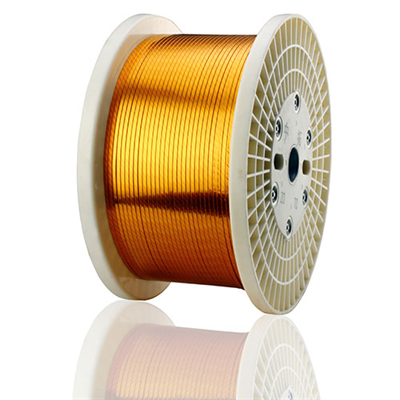
Let’s start with the basics. Most railway rolling stock relies on electric motors for propulsion, right? Whether it’s a light rail vehicle in a city or a long-distance electric train, these motors use wire windings to generate the magnetic fields that turn the wheels. For years, round copper wires were the go-to choice for these windings. But flat wire—so named because its cross-section is a rectangle rather than a circle—changed everything. Why? Because round wires have gaps between them when packed tightly together, wasting space and reducing efficiency. Flat wires lie flush against each other, packing more copper into the same amount of space. That might sound like a small difference, but in the rail industry, every bit of space, weight, and energy saved adds up.
Take traction motors, the heart of a train’s propulsion system. A typical high-speed train’s traction motor needs to deliver consistent, high torque over hundreds of miles, often operating in harsh conditions—extreme temperatures, vibration, and constant wear and tear. Flat wire windings solve a big problem here: thermal management. When electricity flows through a wire, it generates heat, and too much heat can damage the insulation, reduce performance, or even cause a motor to fail. Because flat wires have a larger surface area than round wires of the same total cross-sectional area, they dissipate heat more effectively. Our team at the winding facility works with rail motor manufacturers to design flat wire coils that fit snugly into the motor’s stator slots, with minimal air gaps. That not only improves heat transfer to the motor’s cooling system but also makes the entire motor smaller and lighter. For trains, weight is a critical factor—lighter trains need less energy to accelerate, which cuts fuel costs and reduces emissions. Over the lifespan of a train, that efficiency adds up to millions of dollars in savings and a much smaller carbon footprint.
But traction motors aren’t the only place flat wire winding plays a role in rail applications. Let’s talk about auxiliary systems, which power everything from the train’s air conditioning and lighting to its braking systems and door mechanisms. Auxiliary inverters, which convert the train’s high-voltage DC power to AC power for these systems, rely heavily on flat wire windings in their transformers and inductors. Round wire windings in auxiliary inverters often have higher resistance because of the gaps between wires, leading to more energy loss as heat. Flat wire windings reduce that resistance by up to 20% in some cases, according to the rail industry standards we follow. That means less energy is wasted, so more power goes to the systems that matter for passenger comfort and safety. We’ve seen one light rail client switch from round to flat wire in their auxiliary inverters, cutting their energy consumption per route by 12%—a huge win for both their operating costs and their commitment to sustainability.
Another key area is electromagnetic compatibility (EMC). Trains operate in a crowded space, sharing tracks with signaling systems, communication networks, and other rail vehicles. If a train’s electrical systems emit too much electromagnetic interference (EMI), they can disrupt signaling, cause delays, or even pose safety risks. Flat wire windings help here too. Because they can be wound into tighter, more uniform coils, they produce more consistent magnetic fields, which reduces unwanted EMI. Round wire coils, by contrast, have irregular spacing that can create uneven magnetic fields, leading to higher EMI emissions. Our engineers work closely with rail signaling teams to design flat wire winding configurations that meet strict EMC standards, ensuring that trains don’t interfere with the vital communication systems that keep everyone on track.
Of course, rail applications come with unique challenges that flat wire winding is uniquely suited to address. Vibration is a big one—trains travel over uneven tracks, causing constant vibration that can loosen round wire windings over time, leading to shorts or failures. Flat wires are stiffer and more rigid, so they hold their shape better when wound tightly into coils and installed in motor slots. We use high-quality, temperature-resistant insulation on our flat wires, designed specifically for rail environments, which withstands decades of vibration without cracking or degrading. We’ve tested our windings to meet the ISO 16750 standard for environmental conditions in road and rail vehicles, so our clients know their systems will last, even in extreme climates from sub-zero Canadian winters to scorching desert summers.
I’ll be honest—when I first started in this industry, I thought flat wire winding was just a small component, not a game-changer. But over the years, I’ve worked with dozens of rail operators and manufacturers, and I’ve seen how this technology solves problems that round wires never could. Just last year, a high-speed train manufacturer came to us with a problem: their new model was too heavy, and their traction motors were overheating during long runs at 200 mph. We redesigned their stator coils with flat wire—packing 15% more copper into the same slot space, improving heat dissipation by 25%, and cutting the motor’s weight by 8%. That change didn’t just fix their overheating issue; it allowed them to increase the train’s top speed by 10 mph without sacrificing efficiency.
The shift to flat wire in rail isn’t just about performance—it’s also about meeting the industry’s growing demand for sustainability. Governments around the world are mandating lower emissions from transportation, and rail is already one of the most energy-efficient modes of travel. But flat wire winding takes that efficiency even further. By reducing energy loss in motors and auxiliary systems, trains powered with flat wire use less electricity, which means lower greenhouse gas emissions. For transit agencies operating on tight budgets, that translates to lower operating costs and less reliance on fossil fuels. We’ve seen a 20% reduction in operational energy costs for some of our commuter rail clients after switching to flat wire windings—a saving that can be passed on to passengers or invested in improving service.
But it’s not all about big high-speed trains. Flat wire winding is just as important for smaller rail applications, like freight locomotives and light rail vehicles. Freight operators are under pressure to move more cargo with less fuel, and lighter, more efficient motors powered by flat wire help them do that. Light rail systems in cities, which carry millions of passengers every year, rely on reliable auxiliary systems to keep passengers comfortable—so the heat resistance and EMC performance of flat wire windings are critical to avoiding service disruptions.
As a flat wire winding supplier, our job isn’t just to deliver coils—it’s to partner with rail operators and manufacturers to solve their unique challenges. Every rail project is different: a commuter line in Tokyo has different needs than a high-speed line in Europe, and a freight locomotive in Australia faces different conditions than a light rail vehicle in the U.S. We work with clients to design custom flat wire windings that fit their specific motors, inverters, and auxiliary systems, using high-grade copper and advanced winding techniques to ensure durability and efficiency. We also provide testing and support throughout the installation process, so our clients can be confident that our windings meet all rail industry safety and performance standards.

If you’re a rail manufacturer, transit agency, or maintenance provider looking to improve your rolling stock’s efficiency, reliability, or sustainability, flat wire winding is the technology you need. It’s not just a trend—it’s a proven solution that’s transforming the rail industry, one motor and coil at a time. To learn more about how flat wire winding can benefit your rail applications and discuss custom solutions for your projects, reach out to our team to start a conversation. We’re here to help you navigate the technical requirements, meet your performance goals, and keep your trains running smoothly, mile after mile.
Continuously Transposed Conductors References
- Railway Industry Association. (2022). “Electric Traction Motor Efficiency: Flat Wire Winding Advancements for Rolling Stock.”
- International Organization for Standardization. (2019). “ISO 16750: Road and Railway Vehicles – Environmental Conditions and Testing.”
- IEEE Transactions on Transportation Electrification. (2021). “Thermal Management of High-Speed Traction Motors: The Role of Flat Wire Windings.”
- European Union Agency for Railways. (2020). “Electromagnetic Compatibility Standards for Railway Rolling Stock.”
- Association of American Railroads. (2023). “Energy Efficiency in Freight Locomotives: Material and Design Innovations.”
Tianjin Jingwei Power Technology Co., Ltd.
As one of the most professional flat wire winding manufacturers and suppliers in China, we’re featured by quality products and good service. Please rest assured to buy durable flat wire winding made in China here from our factory. Contact us for more details.
Address: No.1 Chuangxin Rd. Xiaozhan Industrial Park, Jinnan District, Tianjin, China
E-mail: info@jwdc.cn
WebSite: https://www.jw-dcs.com/
